“There is a world of knowledge waiting for you to discover in the fascinating field of Chinese psychology. This ancient and rich tradition is deeply intertwined with the principles and practices of Chinese medicine, offering unique insights and perspectives on the human mind and spirit. By exploring Chinese psychology, you can gain a deeper understanding of yourself and the world around you and open yourself up to new and exciting possibilities for personal growth and transformation. Don’t miss out on this incredible opportunity to expand your horizons and enrich your life – start exploring the field of Chinese psychology today!”
Nils Volden
Chinese psychology is a vital component of Chinese medicine and has a rich history that spans over 3,000 years. Despite its long history and significance, Chinese psychology is often overlooked or not mentioned in discussions about traditional Chinese medicine. However, it played a crucial role in the Long March of 1934-1935, a 9,000 km journey that took place in extremely challenging terrain, during which Chinese medicine was used to significant effect.
Interestingly, Chairman Mao, who led the march, initially held negative feelings towards Chinese medicine. However, his opinion changed after the march, and he eventually became a strong proponent of traditional Chinese medicine. In fact, after the founding of the People’s Republic of China (PRC) on October 1, 1949, Chairman Mao established Traditional Chinese Medicine (TCM) as an official branch of medicine.
Today, Chinese psychology continues to be a fundamental aspect of TCM, as it recognizes the intricate connections between mind, body, and spirit. By addressing psychological factors, TCM practitioners can provide a more integrated approach to healing, which can lead to improved overall health and wellness.

It is important to note the intriguing story of how Traditional Chinese Medicine (TCM) came into existence. It is said that the doctor of Chairman Mao, Dr. Li Zhisui, was a western-trained doctor who revealed that his boss did not believe in or use Chinese medicine. This begs the question: why did Mao decide to establish TCM? The answer lies in the fact that access to western medicine was limited for the 500 million Chinese at that time and there was a chronic lack of western-trained medical doctors. In addition, many peasants relied on Chinese medicine to treat their illnesses.
Although TCM only lasted for a brief period of time (1954-1958) before Mao promoted the unification of Chinese medicine and Western medicine, its impact was long-lasting. Mao’s decision to standardize Chinese medicine through uniforming theories and promoting holism led to the introduction of terms such as preventative care (Yufangxing) and Holism (Zhengtiguan) into the common vocabulary within Chinese medicine. Mao also founded the basis of complementary and alternative medicine (CAM) in the west by introducing noninvasive treatments, patient-centered care, early intervention in treatment, preventative treatment against chronic diseases, treating the origin of illnesses, integrative thinking, and supporting what works.
The new system was taught at academies, and the English word “TRADITIONAL” was used in English rather than in the common Chinese language. A massive campaign, guided by the operation of appendicitis only with acupuncture anesthetics, and a mystical interest for this unknown Chinese medical system, created a worldwide hit: Traditional Chinese Medicine (TCM).
While some may argue that the myth of Chinese medicine lives on in TCM, it is important to understand that TCM is a narrowing of Chinese medicine made by Chairman Mao. Nonetheless, TCM remains a fascinating field to explore, and it is worth taking the time to discover its unique approach to health and healing.

The field of Chinese medicine is undoubtedly rich and diverse, encompassing a multitude of theories and practices. However, it is important to acknowledge that within Traditional Chinese Medicine (TCM), there has been a narrowing of the theories and philosophy used, particularly regarding psychology. With mental illness being officially unrecognized within TCM, the importance of psychological aspects in Chinese medicine has been reduced. Today, discussions around psychology within TCM are typically limited to the seven emotions, Hun and Po, and Shen. It is rare to find modern TCM literature that delves deeper into the complexities of Chinese psychology.

Here the term “Chinese psychology” is commonly used to describe the information collected about psychology within Chinese medicine and philosophy. This information is not owned or invented by any individual. The term “Chinese psychology” is used to illustrate this pool of knowledge and the integration of Chinese psychology into a complete Chinese medicine that covers everything it was intended to include: physiology, psychology, sociology, and spirituality, and not just an incomplete Traditional Chinese Medicine. Some may argue that the term “TCM Psychology” or “Chinese Medical Psychology” would have been more appropriate, as the term “Chinese psychology” may be associated directly with the psychology of the Chinese population. However, the term “Chinese psychology” was selected for the same reason “Chinese medicine” was selected: it is a distinct system that has its roots in Chinese ways of thinking and handles psychological aspects.

Chinese psychology emphasizes the division of the human being into two parts: Yin and Yang, where Yin represents the passive aspect, and Yang represents the active aspect. This division is further extended to individuals, their constitutions, and behaviors. As a result, Chinese psychology classifies individuals into five distinct personalities, known as Roun, Chen, I, Pro, and Teche (Liver, Heart, Spleen, Lung, and Kidney) – a five-element division. It’s worth noting that this is not the same as the more commonly known wood, fire, earth, metal, and water division, which is derived directly from the five elements theory, but it shares some similarities. Each personality has unique qualities and characteristics.
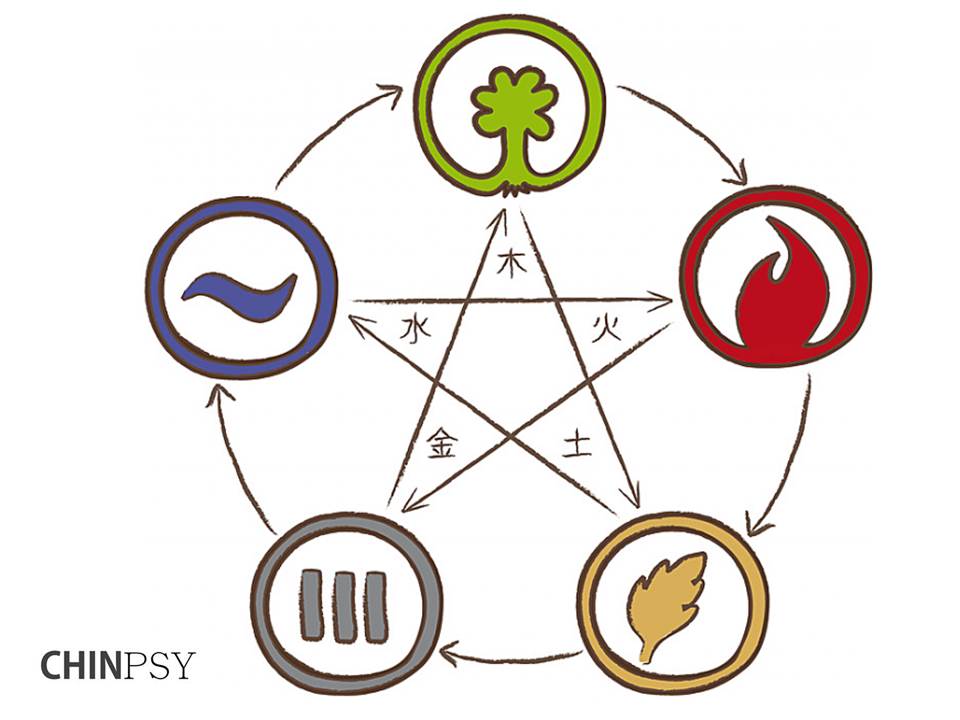
As we go about our daily lives, we encounter various challenges and experiences that shape our thoughts and behaviors. Chinese psychology provides an understanding of these mental processes through a model of the mind. This model explains how the brain functions and interacts with various aspects of the mind, such as Hun, Shen, Yi, Po, and Zhi, which are associated with the liver, heart, spleen, lung, and kidney, respectively, based on the five-element division.
It is worth noting that this mental aspect is not connected in the same way as in the classical five-element model. Instead, the focus is on how the psychic qi, or mental energy, circulates through the mind, how Hun reflects itself into Po, and how these interactions create a Fang wei, or defense mechanism. The mental model also explores the implications of these interactions on the organs, muscles, divergent meridians, and the activation of different Fang weis.
Through Chinese psychology, we can explore various models of Fang wei and gain insight into the interaction between several aspects of the mind, leading to a deeper understanding of our mental processes and behavior.

Chinese psychology offers a holistic and comprehensive approach to understanding human nature and behavior. It provides a unique perspective on who we are, how we are, and why we behave the way we do. The terminology used in Chinese psychology is the same as that in Chinese medicine, with some terms being rarely used in traditional Chinese medicine and some being new to readers. Unfortunately, there is still a lack of comprehensive literature on the topic. However, the insights gained from Chinese psychology can enrich a psychologist’s practice, guide the treatment principles of acupuncturists, help medical doctors better understand their patients, and provide a deeper understanding of the mind for the layperson.
In conclusion, Chinese psychology offers a unique and fascinating perspective on human nature and behavior, deeply rooted in Chinese ways of thinking. Although Traditional Chinese Medicine (TCM) is a narrowing of Chinese medicine made by Chairman Mao, it has had a long-lasting impact on the world of medicine, including the introduction of terms such as preventative care and holism. Despite the reduction of psychological aspects in TCM, Chinese psychology remains a complete psychological system that delves deep into the complexities of the mind. While there is still a lack of comprehensive literature on the topic, the insights gained from Chinese psychology can enrich a psychologist’s practice, guide the treatment principles of acupuncturists, help medical doctors better understand their patients, and provide a deeper understanding of the mind for the layperson.

 ChinPsy